How Spotify and SoundCloud Leverage AI for Music
Ever wondered how Spotify knows what type of mood a particular song is portraying?
It was a regular Tuesday afternoon and I was about to hit my first set at my local gym. I open my Spotify app and go to my Liked Songs section like I usually do. I then noticed that I can filter my liked songs by any particular mood I am feeling.
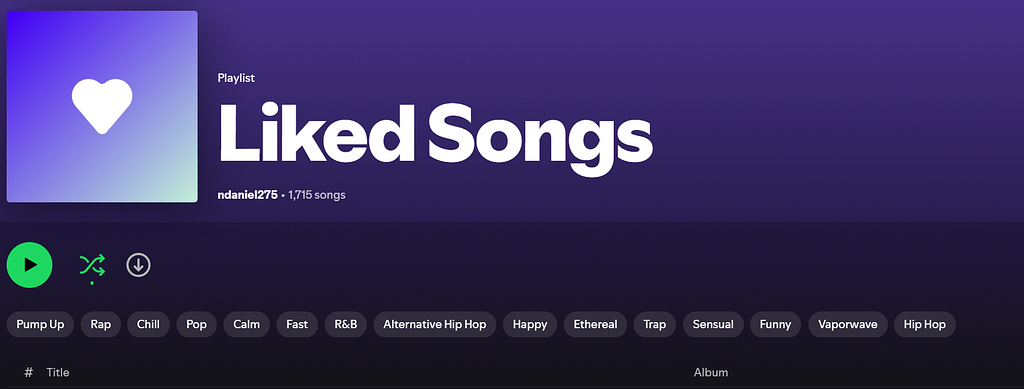
I then stood there and pondered, “How do companies such as Spotify know what mood a particular song is portraying?”. I did assume that they were using some kind of AI model to make this possible, and it turns out, that I was correct! :)
This article explores the sophisticated AI technologies/methods that companies like Spotify and SoundCloud utilize to classify songs and curate personalized listening experiences.
The Challenge of Classifying Music Moods
Music is a universal language that resonates differently with each listener. A single track can evoke a spectrum of emotions — joy, nostalgia, melancholy, excitement — and these feelings can vary widely from person to person.

Emotions aren’t one-size-fits-all. What makes one person feel energized might soothe another. Cultural backgrounds, personal experiences, and even the time of day can influence how we perceive a song. This complexity makes mood classification more intricate than simply tagging a song as “happy” or “sad.”
Unveiling the AI Behind the Music
So, how do platforms like Spotify and SoundCloud tackle this complex challenge?
The answer lies in artificial intelligence. By leveraging AI and machine learning, these platforms can analyze vast amounts of data to understand and classify the moods of songs accurately.
AI models start by “listening” to the music through audio signal processing. They extract various features from the audio file that correlate with certain moods.
import librosa

# Load the audio file
y, sr = librosa.load('your_song.mp3')

# Extract tempo (beats per minute)
tempo, _ = librosa.beat.beat_track(y, sr=sr)
print(f"Tempo: {tempo} BPM")

# Extract the chroma features to determine key
chromagram = librosa.feature.chroma_stft(y, sr=sr)
import numpy as np
key = np.argmax(np.sum(chromagram, axis=1))
print(f"Estimated Key: {key}")
The above is a simple example of using a python library called librosa to extract your_song.mp3 ‘s audio features.
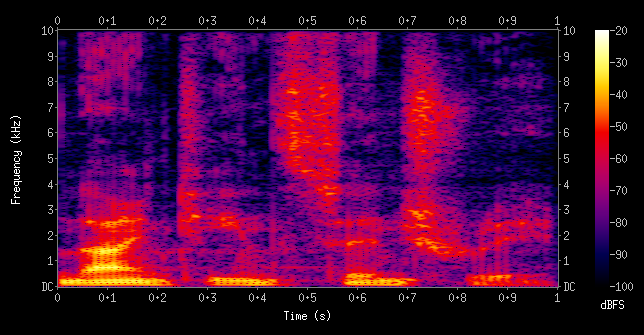
One way AI analyzes music is by converting audio signals into spectrograms — a visual representation of the spectrum of frequencies in a sound.
Machine Learning Models at Work
Once the audio features are extracted, machine learning models take over to classify the mood of the song.
Training the Models
These models are trained on datasets where songs are already labeled with mood tags. Through supervised learning, the algorithms learn to associate specific audio features with particular moods.
With the help of Convolutional Neural Networks (CNNs), the model can identify complex patterns related to different moods.
Here is a sample workflow on how this would work:
- Input Layer: The spectrogram image of the song.
- Convolutional Layers: Extract features like edges and textures.
- Pooling Layers: Reduce dimensionality while retaining important information.
- Fully Connected Layers: Make predictions about the mood category.
Decoding Lyrics with Natural Language Processing (NLP)
While the audio tells part of the story, the lyrics often hold the key to a song’s emotional depth. NLP allows AI to understand and analyze the lyrical content.
By evaluating the words used in the lyrics, AI can gauge the overall sentiment of a song.
from textblob import TextBlob

lyrics = """When the night has come
And the land is dark
And the moon is the only light we'll see"""

analysis = TextBlob(lyrics)
sentiment = analysis.sentiment.polarity
print(f"Sentiment Score: {sentiment}")
Above is an example using the TextBlob library! A sentiment score ranges from -1 (very negative) to 1 (very positive).
Topic Modeling
Beyond sentiment, AI can identify themes within the lyrics, such as love, heartbreak, or resilience, using techniques like Latent Dirichlet Allocation (LDA).
Learning from Listeners: Collaborative Filtering
Data from user interactions is another crucial component. By analyzing how listeners engage with songs, AI models refine their mood classifications and recommendations.
User Behavior Insights
- Playlists: User-created playlists labeled with moods provide direct insights.
- Skips and Repeats: High skip rates might suggest the song doesn’t fit the perceived mood.
Collaborative Filtering Explained
- User-Based Filtering: Finds users with similar tastes and recommends songs they like.
- Item-Based Filtering: Recommends songs similar to those a user has enjoyed.
The Future of AI in Music Streaming
AI continues to evolve, and its role in music streaming is expanding in exciting ways.
Context-Aware Recommendations
Future AI models may consider contextual data like location, time of day, or even current weather to tailor music suggestions more precisely!
Emotional AI Integration
Advancements in wearable technology could allow AI to detect a user’s emotional state in real-time, adjusting playlists to match or alter moods.
Generative Music
AI models like OpenAI’s MuseNet can compose original music, potentially leading to personalized songs generated on the fly to suit individual preferences. 🤯
Next time you’re jamming to a playlist that perfectly matches your vibe, remember the intricate AI processes working behind the scenes.